
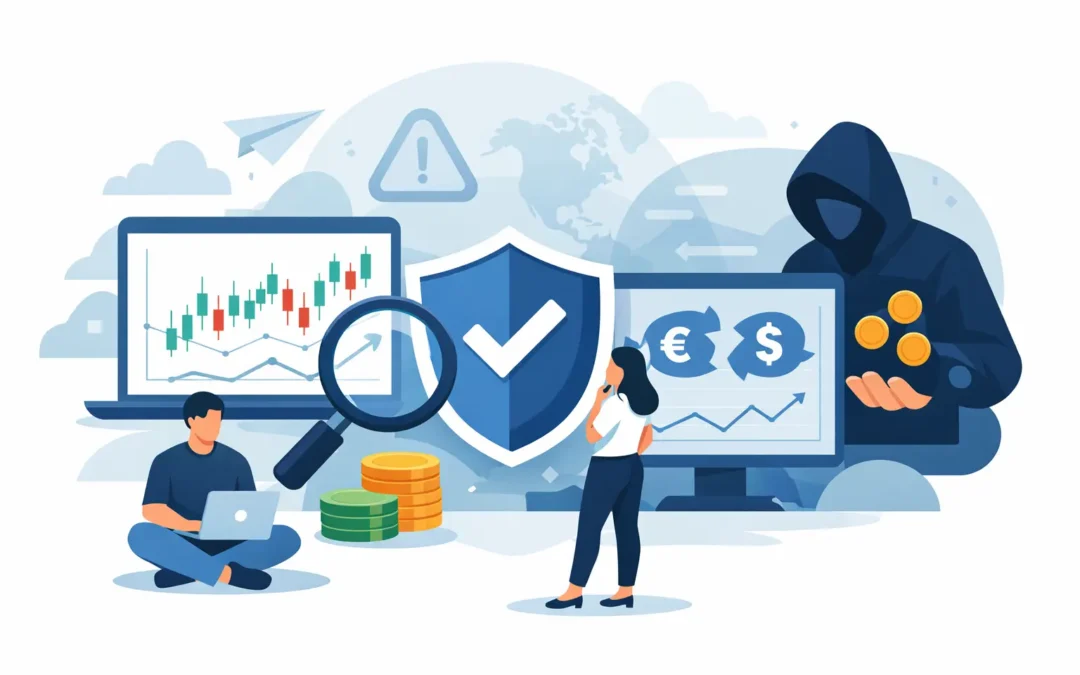
If you are trying to learn forex without scams, you have already worked out the hardest truth in this industry – most of the noise is designed to sell hope, not skill. The moment someone promises fast money, secret signals, or a lifestyle that looks more like a music video than a trading business, you are no longer looking at education. You are looking at marketing.
That matters because forex is hard enough without being misled. Beginners lose months chasing indicators they do not understand. Intermediate traders bounce between systems, convinced the next course will fix poor discipline. What they really need is not more hype. They need structure, evidence, and honest coaching from people who actually trade.
Why so many people fail to learn forex without scams
The forex education space attracts bad actors for one simple reason – frustration sells. If someone has blown an account, missed trades, or spent weeks trying to make sense of conflicting videos, they are vulnerable to simple promises. A scam does not always look like outright fraud. Sometimes it looks like a slick course with no mentor support, no risk framework, and no proof that the person teaching can trade consistently.
This is where many traders get trapped. They think they are buying education, but they are really buying motivation. Motivation feels good for a week. Skill takes repetition, feedback, and a process that can survive a bad month.
A legitimate forex education should make trading look more disciplined, not easier. It should talk about losses, drawdown, position sizing, psychology, and patience. If every message is about freedom, passive income, and quitting your job in 90 days, the offer is built for impulse, not for trader development.
Learn forex without scams by checking the business model
Before you judge the teaching, judge the incentives. This is where a lot of people switch their brains off.
Ask a basic question: is this business built around helping traders improve, or around constantly replacing disappointed buyers with new ones? Serious educators usually have a clear curriculum, ongoing support, a community, live sessions, and some form of accountability. Scam-heavy businesses tend to rely on urgency, countdown timers, rented luxury, and vague claims about what students can earn.
It also helps to look at what happens after payment. If the whole product is a pile of pre-recorded videos and no access to guidance, that is a weak sign. Not because recorded material is useless, but because trading is an applied skill. People make mistakes in execution, risk, trade management, and mindset. Those issues are rarely fixed by watching another module.
Good training often includes mentor feedback, live market breakdowns, and a roadmap that tells you what to focus on first, second, and third. That does not guarantee success, but it does show the provider understands how traders actually improve.
The red flags that deserve your full attention
Some warning signs are obvious. Others are more subtle.
If a mentor cannot explain their strategy in plain English, walk away. If every testimonial talks about money made but none mention process, growth, or support, be careful. If losses are never discussed, you are being sold fantasy. If the educator attacks all criticism while refusing to show consistency, that is another concern.
Be especially cautious with signal-only services dressed up as education. Signals can create dependency. You may copy trades for a while, but you will not learn why a setup exists, when to avoid it, or how to manage risk when conditions change. That is not education. That is outsourcing your judgement.
The biggest red flag of all is pressure. Serious trading educators do not need to bully you into buying before midnight. Professionals know this is a long game.
What real forex education should look like
A proper learning environment should feel less like a sales funnel and more like an apprenticeship. Not glamorous. Useful.
First, there should be a defined method. That does not mean one magical strategy that wins every week. It means a repeatable framework for reading price, identifying setups, managing entries, setting risk, and reviewing performance. Without that, students end up collecting concepts without being able to execute them.
Second, there should be a clear standard for risk management. Any educator worth listening to will spend real time on position sizing, account protection, and expectancy. New traders often skip this because it feels less exciting than entries. That is a mistake. Most people do not fail because they never found a setup. They fail because they could not control themselves when real money was on the line.
Third, there should be coaching or feedback. This is the part many traders underestimate. You can study charts alone for months and still repeat the same errors because nobody is showing you what you missed. A professional mentor shortens that learning curve by pointing out weak decisions before they become expensive habits.
This is why mentor-led training tends to produce better outcomes than random self-study. Not because the market becomes easy, but because the student stops guessing.
How to vet a forex mentor properly
Do not be impressed by followers. Social media rewards entertainment far more than competence.
Look for a mentor who speaks clearly about process, not just outcomes. They should be comfortable discussing bad trades, risk limits, and the emotional side of execution. Experienced traders do not pretend they win all the time. They know consistency comes from managing uncertainty, not avoiding it.
Proof also matters, but it needs context. Screenshots of winning trades are cheap. What you want is evidence of a real teaching structure and signs that students are learning how to think, not just what to copy. Testimonials are useful when they describe specific improvements such as better risk control, more disciplined entries, or a clearer trading plan.
Pay attention to how the mentor communicates. Are they direct when they need to be, but still supportive? Do they answer practical questions? Do they challenge lazy thinking? Good mentorship is not about making you feel clever. It is about helping you become competent.
A serious service may also offer some form of guarantee or transparent refund policy. That does not make it automatically trustworthy, but it does show confidence in the value being delivered.
Learn forex without scams by changing your own expectations
This part is uncomfortable, but necessary. Scams thrive because too many people want trading to be simpler than it is.
If you want to learn forex without scams, stop shopping for certainty. Start looking for honesty. The right educator will not promise that you will make money next week. They will show you how to build a process, test it, track it, and improve it with discipline. That is a much less exciting message, which is exactly why it is usually more credible.
You also need to accept that progress in forex is uneven. Some weeks everything clicks. Other weeks expose weaknesses in patience, bias, or execution. That is normal. The goal is not to feel confident every day. The goal is to become consistently professional in how you prepare, manage risk, and review trades.
When traders shift from chasing shortcuts to building habits, the whole game changes. They stop asking, “What is the best indicator?” and start asking, “What is my edge, and can I execute it repeatedly?” That is a better question. It leads somewhere real.
A safer path for serious learners
The safest route is usually the least flashy one. Find a provider with a proper curriculum, live guidance, and real mentor access. Look for a community where trading ideas are discussed with context, not shouted as alerts. Choose education that treats trading as a business skill rather than a lottery ticket.
That is also why many serious traders eventually gravitate towards mentorship-based training businesses such as Forex Mentor Pro. Not because a mentor can remove risk, but because the right environment gives traders something scams never can – a repeatable framework, direct feedback, and standards that force better decisions.
There is still no shortcut. You will still need to study, journal, review, and do the boring work. But boring work is often what separates progress from another blown account.
If you have been burned before, do not take that as proof that forex itself is a con. Take it as proof that you need better filters. The right education will not sell you a fantasy. It will hand you a process, call out your weak habits, and help you build the kind of discipline that can still be standing a year from now.