
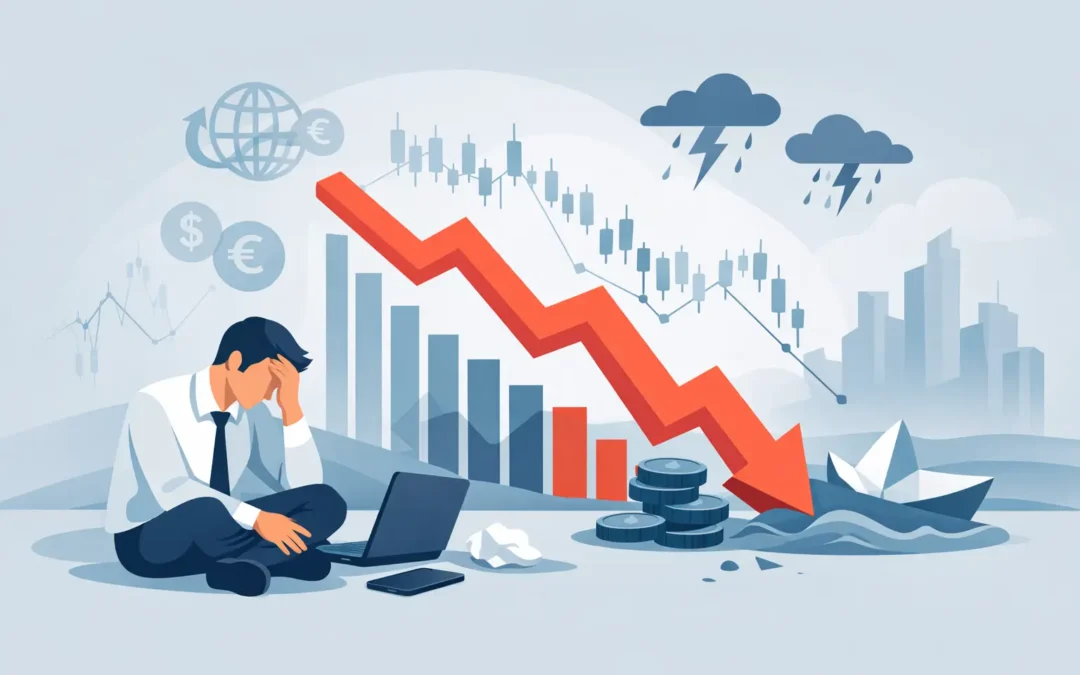
A trader wins three trades in a row, sizes up too quickly, takes one bad loss, then spends the next week trying to get it back. That pattern is more common than most people admit, and it gets to the heart of why do forex traders fail. It is rarely because the market is impossible. More often, it is because people approach trading with the wrong expectations, weak structure and no real process for managing risk, psychology and execution.
That might sound blunt, but blunt is useful here. Retail traders are not usually beaten by one dramatic mistake. They are beaten by a chain of ordinary, repeated errors that look harmless in the moment. A rushed entry. A moved stop. An oversized position. A system changed after two losses. None of that feels catastrophic on its own. Together, it destroys accounts.
Why do forex traders fail even with good intentions?
Most failing traders are not lazy. In fact, many are trying too hard in the wrong direction. They watch endless videos, follow too many opinions and jump from strategy to strategy looking for certainty. The problem is that trading does not pay the person who gathers the most information. It pays the person who can execute a sound edge with discipline over time.
Good intentions are not a trading plan. Motivation is not risk management. Confidence is not proof of skill. If you treat forex like a fast route to income, the market will usually expose that mindset very quickly.
There is also a hard truth that many people avoid. A lot of traders are learning from marketers, not traders. They are sold the idea that the right indicator, the right signal group or the right secret setup will remove uncertainty. It will not. Professional trading is about handling uncertainty properly, not pretending it does not exist.
The biggest reasons traders lose
They risk too much on single trades
This is the account killer. A trader can survive a weak week with sensible position sizing. They usually cannot survive repeated emotional bets. Once risk becomes too large, decision-making gets worse. Stops are widened. Plans are ignored. Fear and greed take over.
Small risk sounds boring, and that is exactly why many people ignore it. But boring keeps you in the game. If your account swings wildly from one setup to the next, you are not building consistency. You are gambling with better terminology.
They do not have a repeatable system
Many traders think they have a strategy when they really have a collection of ideas. One day they trade breakouts, the next day support and resistance, then they start mixing indicators because a social media clip made something look easy.
A repeatable system means clear entry criteria, clear invalidation, clear target logic and clear rules on when not to trade. It also means enough historical and live testing to know what normal drawdown and performance look like. Without that, every loss feels like proof the strategy is broken, when it may simply be part of the statistics.
They confuse activity with progress
More screen time does not always make you better. Sometimes it just gives you more chances to make low-quality decisions. Traders often fail because they force trades in poor conditions, especially after a quiet session or a missed setup.
Patience is difficult because it feels unproductive. But waiting for your conditions is part of the work. Professionals are selective. Struggling traders often think they need more trades when they really need better filters.
Why do forex traders fail after some early success?
This catches a lot of people. A trader gets a good run at the start and assumes they have cracked it. Then the market shifts, losses arrive and the emotional reaction is stronger because expectations were unrealistic.
Early success can be dangerous if it teaches the wrong lesson. If someone wins while overleveraged, trading impulsively or ignoring risk rules, they may believe those behaviours work. Eventually the bill arrives. The market is very good at rewarding bad habits in the short term and punishing them later.
That is why process matters more than a hot streak. A profitable month means very little if it came from reckless execution. The question is not just whether you made money. It is whether you traded in a way that can be repeated without blowing up.
Psychology matters, but not in the fluffy way
Trading psychology is often talked about badly. People make it sound mystical, as if confidence alone solves everything. It does not. Most psychological problems in trading are made worse by practical failures.
If your risk is too high, of course you will feel anxious. If your plan is vague, of course you will hesitate. If you are taking random setups, of course your confidence will disappear after a few losses. A lot of what traders call mindset issues are really structure issues.
That said, emotional control still matters. You need to be able to take a loss without revenge trading. You need to follow rules when you are bored, frustrated or overconfident. You need to accept that missing a trade is better than forcing one. These are not personality traits you either have or do not have. They are habits you build through repetition, review and accountability.
The industry itself sets people up badly
Let us be honest about this. Many beginners enter forex through marketing BS. They are shown luxury lifestyles, not trade journals. They are promised freedom, not routine. They are taught to chase pips, not manage downside.
That framing does damage. It attracts people who want relief from financial pressure, which is understandable, but pressure and trading are a bad mix. If you need every trade to work, you will make poor decisions. If you expect quick money, you will not respect the long learning curve.
This is one reason mentorship matters when it is genuine. Serious guidance helps traders replace fantasy with structure. It gives them a framework, feedback and a standard to work to. That does not remove the effort, but it can stop years of avoidable mistakes.
What successful traders do differently
The traders who last tend to become very ordinary in the best sense of the word. They stop chasing excitement. They start thinking in probabilities. They accept that losses are part of the business.
They know their setups. They know how much they are risking. They know when they are trading well even if the result on a single trade is negative. They review their performance honestly and make measured adjustments instead of emotional ones.
Just as importantly, they build routines around trading. Preparation, execution, review. The market does not reward random effort. It rewards disciplined repetition.
At Forex Mentor Pro, that is the shift serious traders need to make. Stop looking for the magic trick. Start building the habits and structure that professionals rely on.
Can most failing traders turn it around?
Yes, but not by doing more of the same. If you keep changing strategy every fortnight, risking too much and relying on emotion in live trades, the outcome will not suddenly improve because you want it more.
Progress usually starts with simplification. One market approach. One risk model. One review process. Then enough time to gather meaningful data. For some traders, the biggest improvement comes from taking fewer trades. For others, it comes from finally writing rules down and following them. It depends on the gap between what they think they are doing and what they actually do under pressure.
Not every trader will become consistently profitable quickly. Some will need longer than they expected. Some may find that the hardest part is not technical analysis but patience and self-control. That is normal. The key is to treat trading as a skill business, not a guessing game.
If you are asking why do forex traders fail, the useful answer is not that the market is stacked against you. It is that most people come in unprepared for what success actually requires. The encouraging part is that these failures are not random. They can be identified, measured and corrected.
You do not need a more exciting strategy. You need a calmer process, tighter risk control and the honesty to stop pretending that shortcuts work. That is where real progress begins.